
Rock mulch has become a popular material in landscape design because of its durability, low maintenance, and aesthetic versatility. Unlike typical organic mulch, which degrades over time, rock mulch has a long-lasting appeal while helping to manage weeds, conserve soil moisture, and prevent erosion.
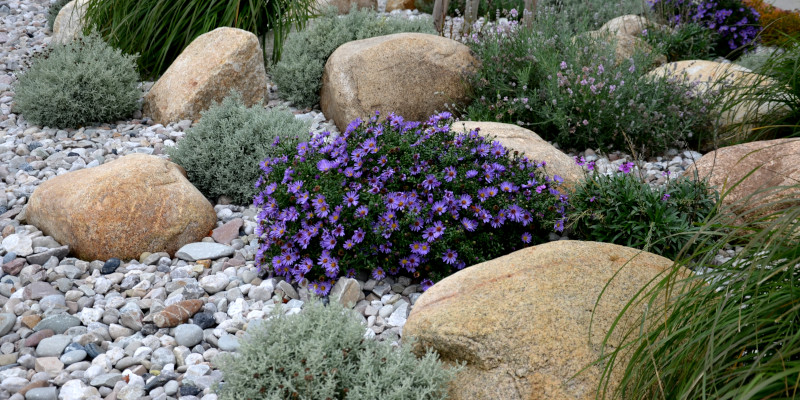
Here are a few ways that rock mulch could be used in your home’s landscape design.
- Garden Borders: Rock mulch comes in a variety of hues and textures, from slick river stones to craggy volcanic rock, and can be used to enhance flower beds, walkways, and tree bases. This not only frames the greenery nicely, but it also adds contrast, making the plants stand out.
- Xeriscaping: Rock mulch is a key component of xeriscaping, which promotes drought-tolerant landscapes. It can be used to cover areas around succulents, cacti, and decorative grasses, giving them a distinctive, modern appearance while conserving water. It can also be used in combination with drought-resistant plants, creating a visually appealing and environmentally friendly landscape.
- Pattern Design: Since rock mulch comes in a variety of hues and textures, it can be used to create geometric forms, swirls, and even mosaics. Doing so gives the landscaping personality and visual interest.
- Functionality: Rock mulch is also a go-to solution for functional outdoor features. It is frequently used around playsets to cushion falls, along driveways to regulate drainage, and around fire pits to provide a safe, non-flammable base.
Whether it’s enriching plant beds, conserving water, or creating eye-catching patterns, rock mulch provides limitless opportunities to elevate outdoor areas through creativity and function.